
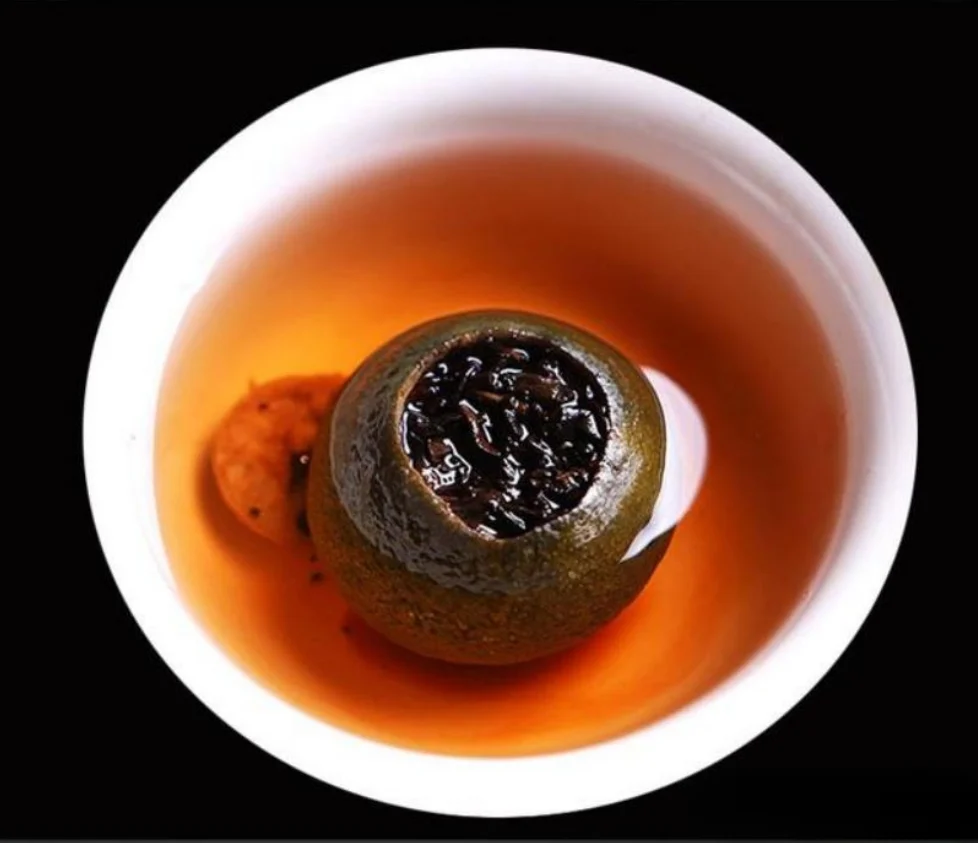
What allows a tiny green mandarin from China’s Xinhui region to fascinate tea lovers around the world? Behind each piece of Xinhui Xiao Qing Gan lies more than seven centuries of local terroir and craftsmanship, concentrated into one fragrant cup.
Born from Xinhui’s Protected Terroir
Xinhui citrus is a National Geographical Indication product. Only fruit grown within the officially defined region can carry this name. The area sits around 22°N latitude with a subtropical monsoon climate, alluvial river soil and the famous “triple-water confluence” terrain. These elements work together to create the so-called “golden mandarin.”
The peel of this mandarin is rich in essential oils, especially limonene, which has been widely studied for its refreshing aroma and traditional use in soothing the chest and throat. When the peel is dried and aged, those oils become even more concentrated and layered.
One Mandarin, One Brew: A Small Innovation with 700 Years Behind It
For generations, people in southern China brewed tea with pieces of aged Chenpi (tangerine peel). The balance between tea and peel depended entirely on experience — too much peel and the liquor became sharp, too little and the citrus character disappeared.
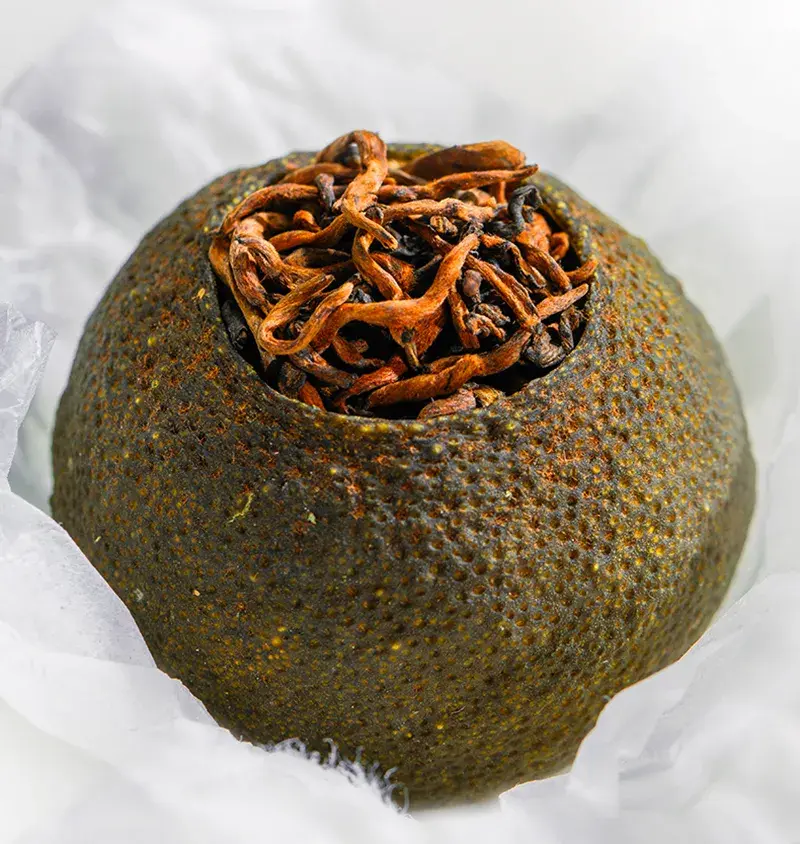
Xinhui tea artisans modernised this tradition by hollowing a small green mandarin and filling it with aged Pu-erh tea. The result is one mandarin, one brew: you simply drop a whole Xiao Qing Gan into your teapot or gaiwan. Each piece already contains the ideal ratio of peel to tea, turning centuries of know-how into an easy, everyday ritual.
From Lime-Like Bite to Amber Sweetness
Freshly made Xiao Qing Gan can taste as sharp as a squeeze of lime: bright, brisk and a little wild. As the citrus shell and Pu-erh rest together over the years, something remarkable happens. After about five years, the liquor turns a deep amber, the edges of the citrus soften, and a long, gentle sweetness appears in the finish.
Tea polyphenols from the Pu-erh and citrus oils from the peel interact during this slow aging. First they “break” down harsh notes, then rebuild a smoother, more rounded cup — a flavor journey many tea lovers describe as “first cleansing, then comforting.”
White Frost: The “Amber of Time” on Chenpi and Xiao Qing Gan
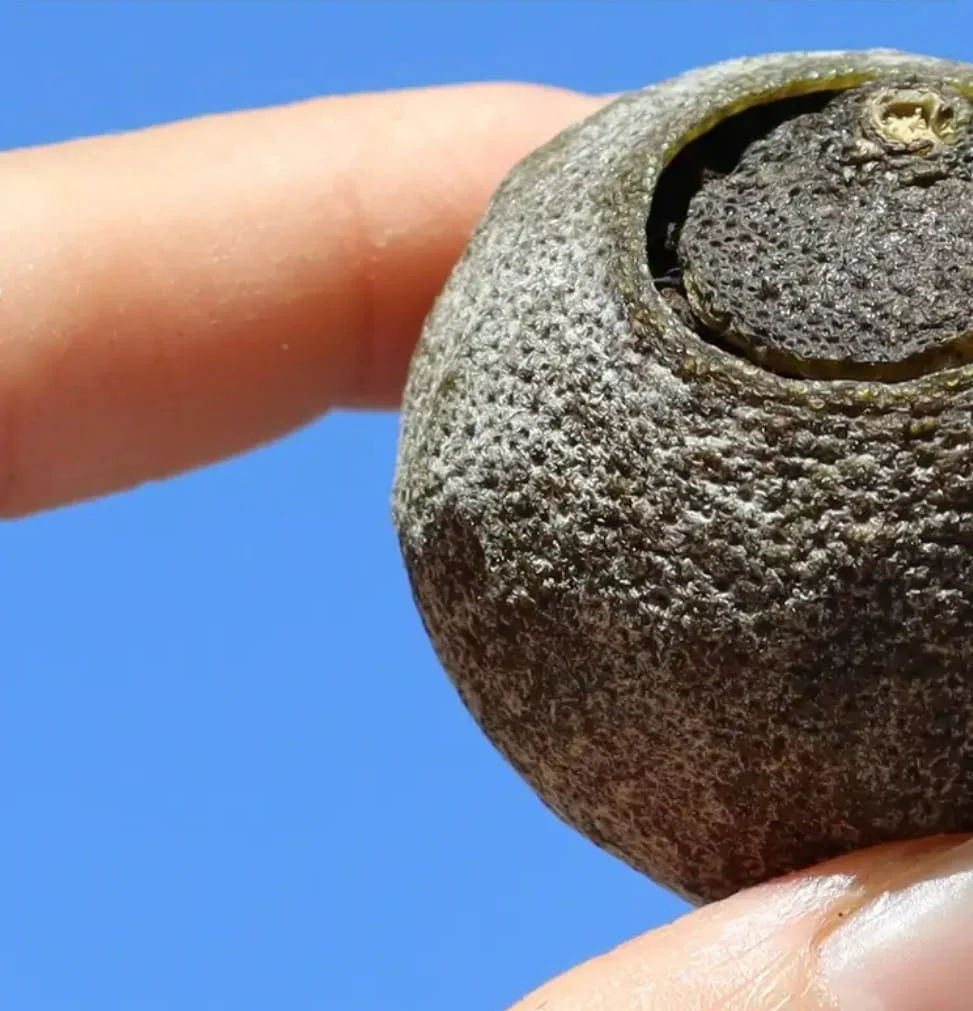
Many people are surprised the first time they see a layer of pale crystals on aged Xiao Qing Gan or Chenpi. It is often mistaken for mold, but in properly stored peel this “white frost” is actually crystallised citrus oil that has migrated to the surface during aging.
Studies of long-aged Xinhui Chenpi show that the density of this frost tends to increase with time — fifteen-year peels can be almost covered, earning poetic nicknames such as “amber of time.” For tea drinkers, a fine, even frost is a visual hint that the peel has been quietly transforming for many years.
Bringing 700 Years of Heritage into Your Cup
Each Xiao Qing Gan is a small capsule of Xinhui’s landscape, climate and history: golden mandarins from protected orchards, carefully dried and filled with aged Pu-erh, then patiently stored until peel and tea breathe in harmony. When you brew one, you are tasting more than a blend — you are tasting a living piece of citrus heritage.
If you would like to explore different styles and aging levels of Xiao Qing Gan, visit our Xiao Qing Gan collection . To learn more about why the Xinhui region is so special for both Xiao Qing Gan and Chenpi, read our in-depth guide Why Xinhui Is So Special .