
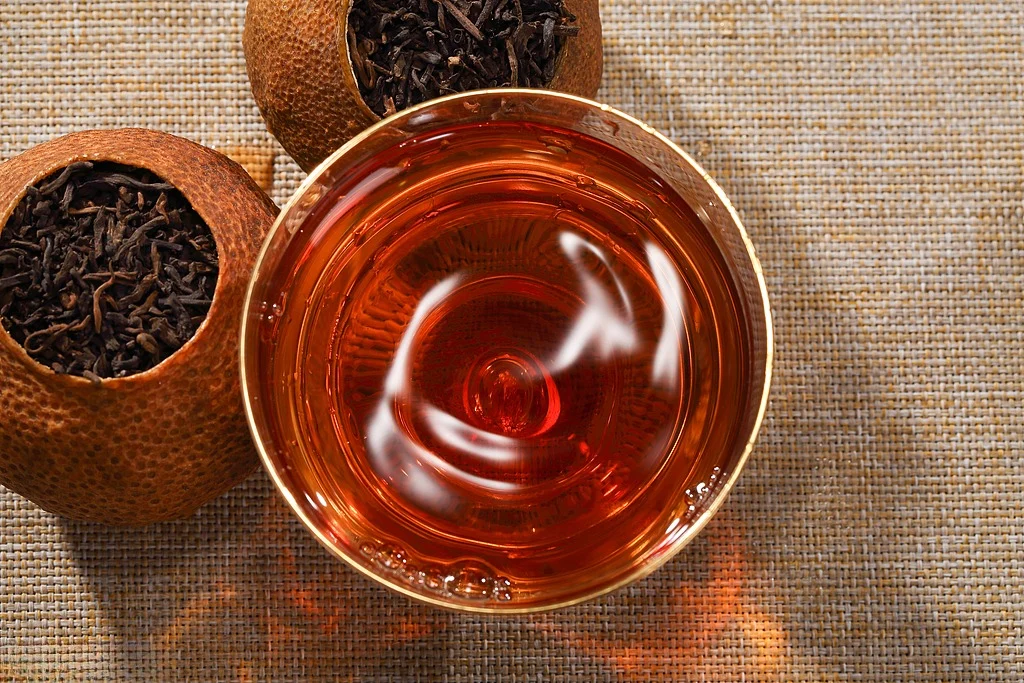
Xiao Qing Gan tea is a small, round, greenish ‘fruit’ you might have seen sitting in a teacup.If you’ve spent any time exploring Chinese wellness teas, you’ve probably seen a small, round, greenish “fruit” sitting in a teacup and wondered what it is. That cute little sphere is XiaoQingGan – a whole young green mandarin from Xinhui, hollowed out and filled with ripe Puerh tea from Yunnan.
Over the last decade, XiaoQingGan has become a star in modern Chinese tea culture. It’s beautiful to look at, simple to brew, and loved by people who want the comfort of Puerh without an overpowering earthy taste. In English you’ll sometimes see it called Green Mandarin Puerh or Citrus Puerh Tea.
This guide will walk you through what XiaoQingGan is, what it tastes like, and why it’s such a perfect companion for the office, travel, and slow moments of self‑care.
What Is XiaoQingGan?
At its core, XiaoQingGan is a whole, unripe Xinhui mandarin (from Guangdong, China) combined with ripe Puerh tea.
- The small green mandarin is picked before it is fully ripe.
- The fruit is carefully hollowed out so only the aromatic peel remains.
- The shell is filled with ripe (shu) Puerh, then gently dried and aged.
The result is a tiny, self‑contained tea “pod” that brings together two famous ingredients: the high‑aroma green mandarin peel and the rich, mellow warmth of ripe Puerh.
The Marriage of Flavors
You can think of XiaoQingGan as a flavor partnership between the shell and the filling.
The Shell: Green Mandarin
The outer peel is what people mean when they say “Green Mandarin”. It’s the same citrus family used to make Xinhui Chenpi, but harvested young, while the peel is still green and intensely aromatic.
- Aroma: bright, high‑pitched, citrusy and slightly floral
- Character: refreshing, uplifting, with a pleasant bitterness that cleans the palate
The Filling: Ripe Puerh
Inside the fruit is ripe Puerh from Yunnan province. Ripe Puerh is famous for being:
- Dark, smooth, and round in body
- Comforting and “warming,” especially in cooler weather
- Much less sharp or astringent than many black teas or young raw Puerh
A good ripe Puerh gives XiaoQingGan its depth and creamy texture.
The Result: What Does XiaoQingGan Taste Like?
So, what does XiaoQingGan taste like?
When you brew it, the liquor is usually red to deep mahogany, clear and bright. On the palate, you get:
- The citrus top notes from the green mandarin – fresh, slightly zesty, almost like orange peel and herbs
- The smooth, earthy sweetness of ripe Puerh in the base
- Very little bitterness or astringency when brewed properly
Many people describe it as a balanced Citrus Puerh Tea: comforting like Puerh, but lighter, fresher, and easier to love at first sip—especially for those who are curious about Puerh but afraid of an overly “earthy” or “muddy” flavor.
Why It’s Perfect for Office & Travel
Beyond the flavor, XiaoQingGan is popular because it fits modern life extremely well.
Convenience: One Piece, One Session
Each XiaoQingGan is like a pre‑measured tea portion:
- No need to weigh loose leaves
- No need to break apart a Puerh cake
- Just place one whole fruit (or half, if it’s large) into your teapot, gaiwan, or even a sturdy mug with a strainer.
Add hot water, steep, and you’re done. For office workers or travelers, it’s a stress‑free way to enjoy a high‑quality traditional tea without any tools beyond a simple kettle.
Endurance: A Whole Day of Tea
A good XiaoQingGan is also incredibly enduring:
- One piece can easily handle 10 infusions or more.
- The flavor starts brighter and more citrus‑forward, then gradually becomes rounder and sweeter as the mandarin and Puerh fully open.
This makes it ideal for:
- Long days at the desk
- Study sessions
- Road trips or hotel stays
You can simply keep topping up with hot water throughout the day and enjoy how the taste gently evolves.
The Aesthetics of XiaoQingGan
Part of the charm of XiaoQingGan lies in how it looks and feels.
The small green mandarin itself is already eye‑catching, but thoughtful packaging takes it to another level. At OUDA TEA, our XiaoQingGan designs highlight the natural beauty of the fruit with a signature “green mandarin” color palette that reflects freshness, clarity, and the lush orchards of southern China.
When you open a box, you don’t just see tea—you see:
- Neatly arranged, perfectly formed little fruits
- A harmony of “Chenpi gold” and “Qinggan green” tones in the box and labels
- A visual promise of clean, fragrant, modern Chinese tea culture
Pour the brewed tea into a glass cup and the experience continues: the contrast between the deep reddish liquor and the green‑gold accents of the packaging creates a simple but striking visual ritual. It’s the kind of tea you’ll want to photograph, not just drink.
For Puerh Newcomers Who Fear the “Earthy Taste”
If you’re curious about Puerh but worried it might be too strong, smoky, or earthy, XiaoQingGan is an excellent entry point.
- The citrus peel softens and brightens the Puerh base.
- The tea feels warming yet refreshing, rather than heavy.
- The flavor is complex, but rarely aggressive—easy to sip slowly, all day long.
It’s a bridge between classical Chinese dark tea and the lighter herbal or citrus teas many Western drinkers already enjoy.
Explore Our Premium XiaoQingGan Selection
Whether you’re building a daily wellness ritual, upgrading your office tea game, or looking for a thoughtful gift for a tea‑loving friend, XiaoQingGan is a beautiful place to start. It combines the heritage of Xinhui citrus, the depth of Yunnan ripe Puerh, and the convenience modern life demands.
If you’d like to taste this fusion for yourself,
Explore our Premium XiaoQingGan Selection.
What is Xiao Qing Gan tea?
Xiao Qing Gan tea is a whole young green mandarin from Xinhui, hollowed out and filled with ripe Puerh tea from Yunnan. The citrus peel and dark tea are dried and aged together, creating a single, convenient tea “pod”.
How does Xiao Qing Gan tea taste?
It combines bright, zesty citrus notes from the green mandarin peel with the smooth, earthy sweetness of ripe Puerh. When brewed well, it is rich, warming and low in bitterness.
How many infusions can one Xiao Qing Gan make?
A good Xiao Qing Gan can easily handle around 10 or more infusions. The taste starts more citrus-forward and gradually becomes rounder and sweeter as both the peel and Puerh open.
Why is Xiao Qing Gan good for work and travel?
Each piece is a pre-measured portion of tea. You simply place the whole fruit or half into a pot or mug, add hot water, and re-infuse throughout the day, making it ideal for the office, study sessions or trips.