
Chenpi as a Living Micro-Ecosystem
Many people think chenpi is just a piece of dried citrus peel. In reality, authentic Xinhui chenpi is far more than that. During its aging process, it becomes a tiny ecosystem. On and within the peel, colonies of microorganisms interact with the peel’s natural compounds, transforming volatile oils and sugars into flavonoids.
These flavonoids are the secret behind chenpi’s rising medicinal and wellness value as it matures. When the environment is right, the peel does not simply “sit there” — it continues to breathe, evolve and accumulate new aromatic and bioactive compounds year after year.
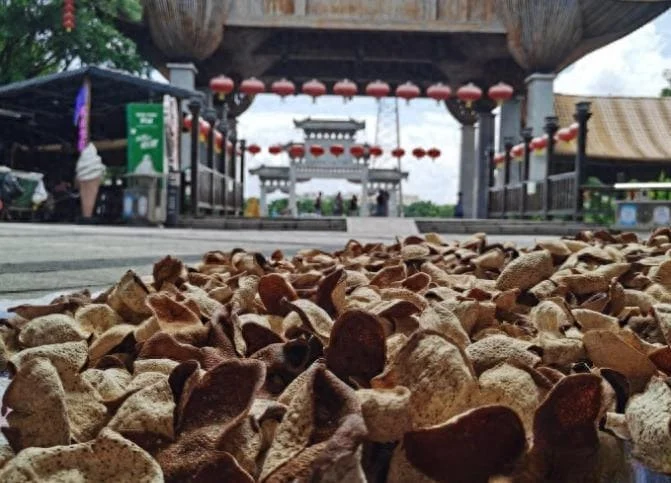
From Bright Citrus to Deep Aged Aroma
The popular saying “the older, the more fragrant” is more symbolic than literal. Young chenpi carries bright, fresh citrus and floral aromas. As it ages, the scent becomes subtle and restrained, only releasing its deep richness when brewed. Behind this transformation is a delicate balance of biology and chemistry — temperature, humidity, oxygen and microbial activity all play a role.
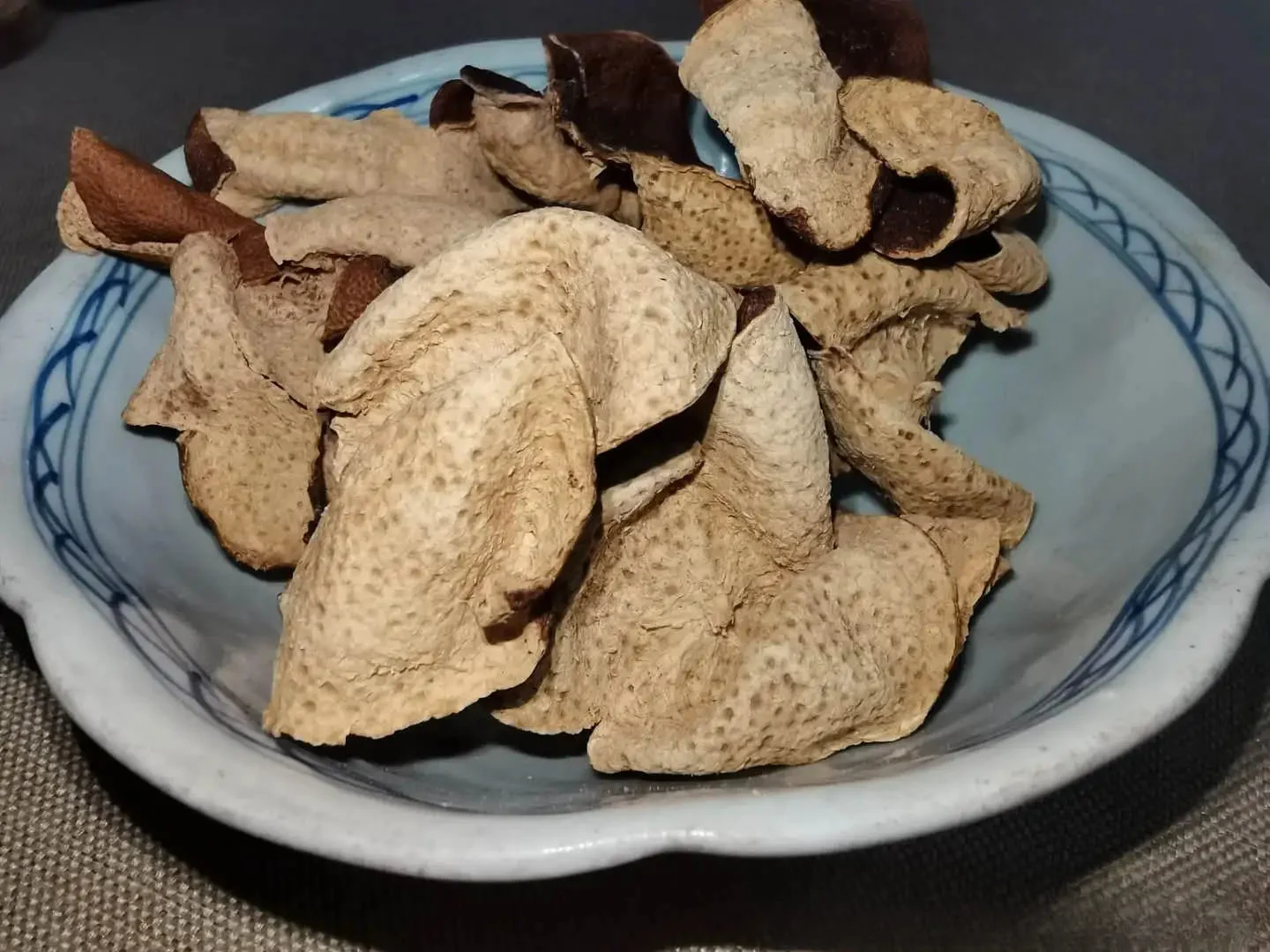
Flavonoids: The Invisible Engine Behind Chenpi’s Power
Modern research has identified hundreds of metabolites produced during chenpi’s aging, with flavonoids standing out as the key bioactive compounds. These not only influence taste and aroma but also connect directly to the herb’s traditional role in digestive health and holistic balance.
This is why chenpi should not be judged simply by age. Its true value comes from proper natural aging in the right conditions, where time, air flow and micro-organisms quietly reshape the peel from the inside out.
The Gold Standard for “Living” Xinhui Chenpi
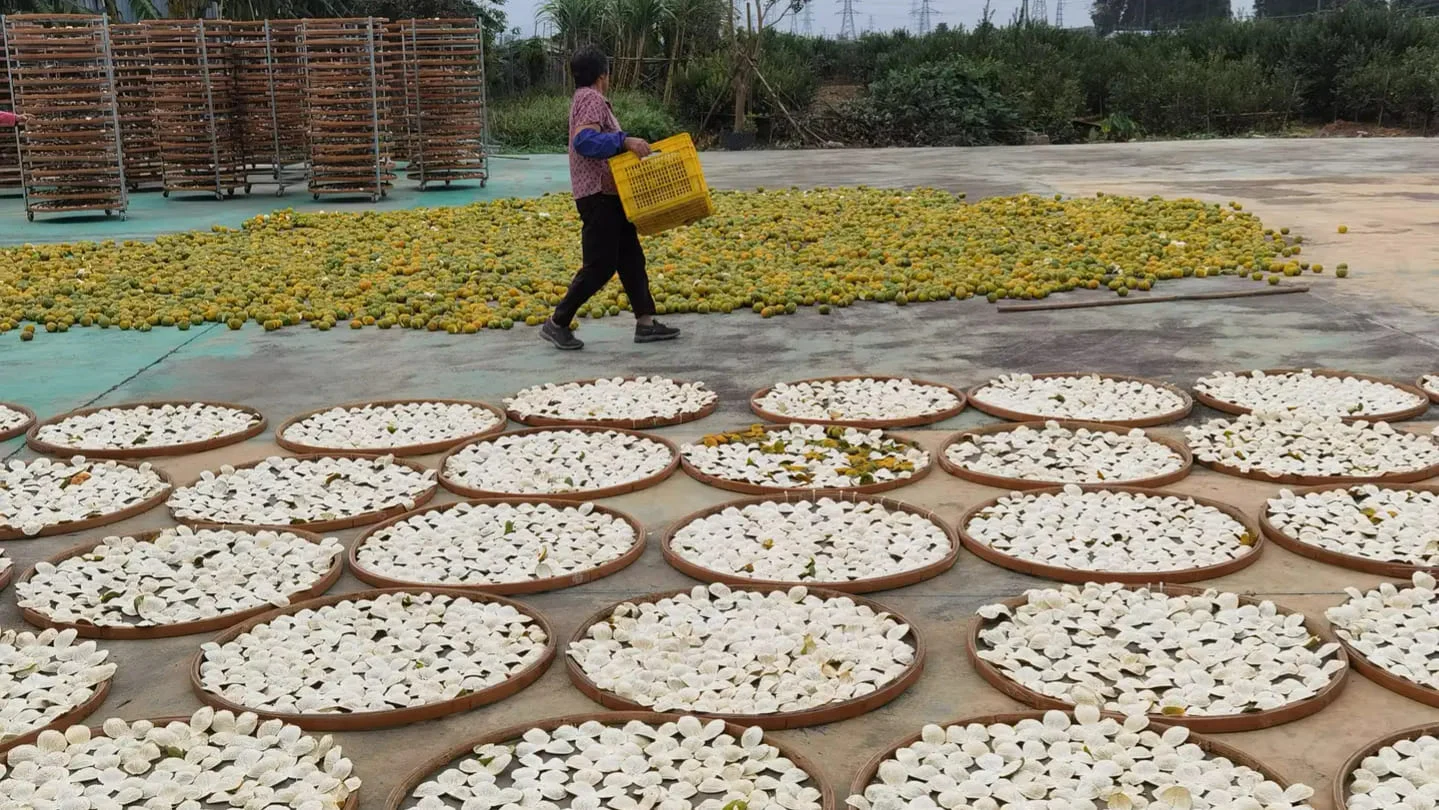
The gold standard for premium chenpi rests on three fundamentals: grown in Xinhui’s terroir, made from the local citrus variety, and aged naturally in Xinhui’s unique humid microclimate. Attempts to replicate this elsewhere often fail, leaving the peel dry and lifeless.
Craftsmanship That Keeps Chenpi Alive
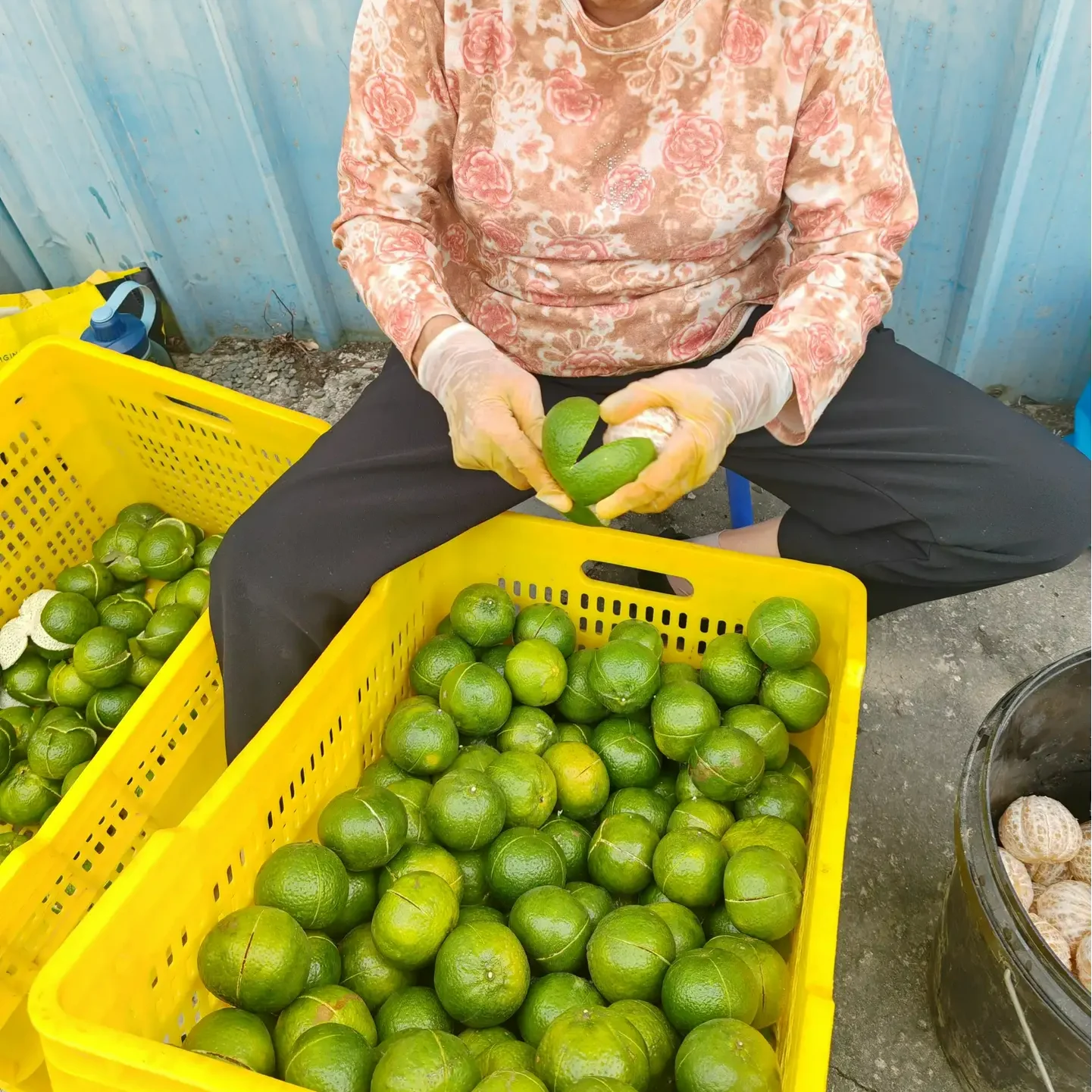
For centuries, Xinhui has preserved this craft. Every step — harvesting at the right time, precise peeling, natural sun-drying and careful storage under the “three no-contact” rule (off the ground, away from walls, below ceilings) — ensures that chenpi continues to “live.”
Only through this harmony of environment, tradition and time can chenpi evolve into the prized “living peel,” instead of becoming a lifeless specimen. This is what separates real Xinhui Chenpi from ordinary dried citrus peel produced elsewhere.
How to Bring “Living Chenpi” into Your Daily Wellness
If you want to experience “living” Xinhui Chenpi in your own cup, start with well-aged peels from trusted sources and respect their natural aging. Avoid sealed plastic bags, artificial drying or environments that are too damp or too hot — all of these can suffocate the peel or encourage mold instead of healthy fermentation.
For a practical guide to aging and storing Chenpi at home, read our Xinhui Chenpi aging & storage guide . If you are unsure whether your peels are genuine, our authentic Xinhui Chenpi identification checklist will help you check color, oil cells, aroma and texture with confidence.
When you are ready to taste, you can explore our curated aged Xinhui Chenpi collection to find 3-year, 5-year, 10-year and older batches. Each lot is sourced directly from Xinhui’s core production area and aged using the same principles that keep Chenpi “alive” instead of merely dried.
To learn more about how we grow, craft and protect the quality of our Chenpi and Xiao Qing Gan, visit our Quality & Sustainability page.