
Chenpi Xiao Qing Gan Pu-erh tea combines aged Chenpi, young green mandarins and fermented Pu-erh tea into one family of citrus Puerh blends. This article gives you an overview of how Chenpi, Xiao Qing Gan and Pu-erh relate to each other in the cup.
What is Chenpi?
Learn more about the benefits and daily drinking tips for Chenpi tea here.
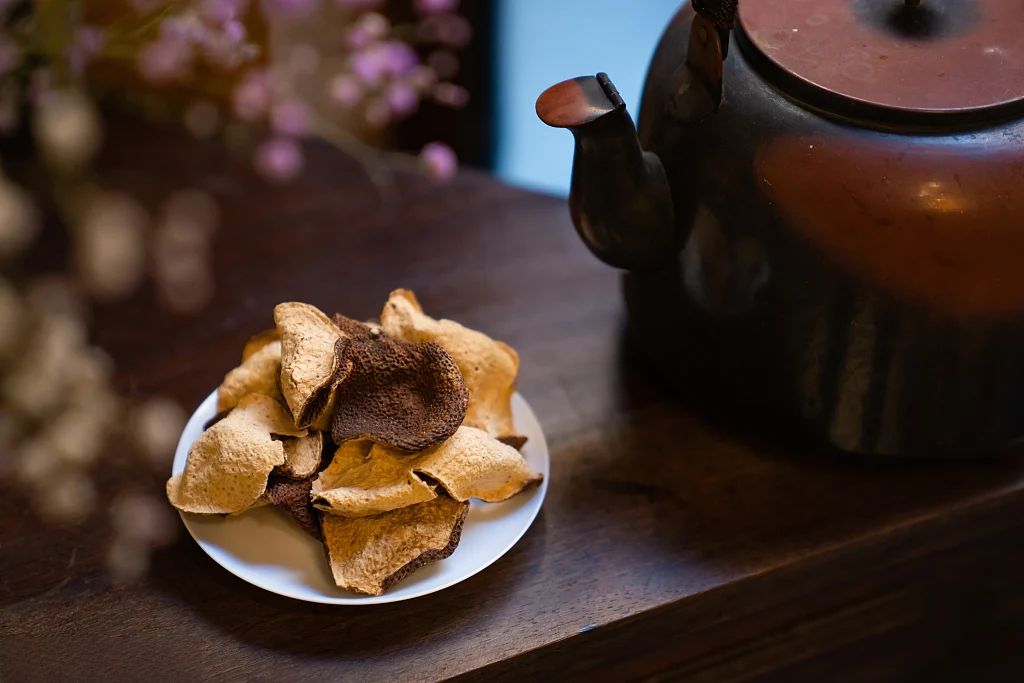
Chenpi refers to the dried peel of a special variety of mandarin orange, the Xinhui variety, which is grown in Guangdong Province. It’s known for its medicinal properties and is commonly used in traditional Chinese medicine. Chenpi needs to be aged for at least three years to achieve its full flavor and medicinal benefits.
Xiao Qing Gan – The Little Green Tangerine
New to Xiao Qing Gan? Read our full beginner’s guide to Xiao Qing Gan tea here.
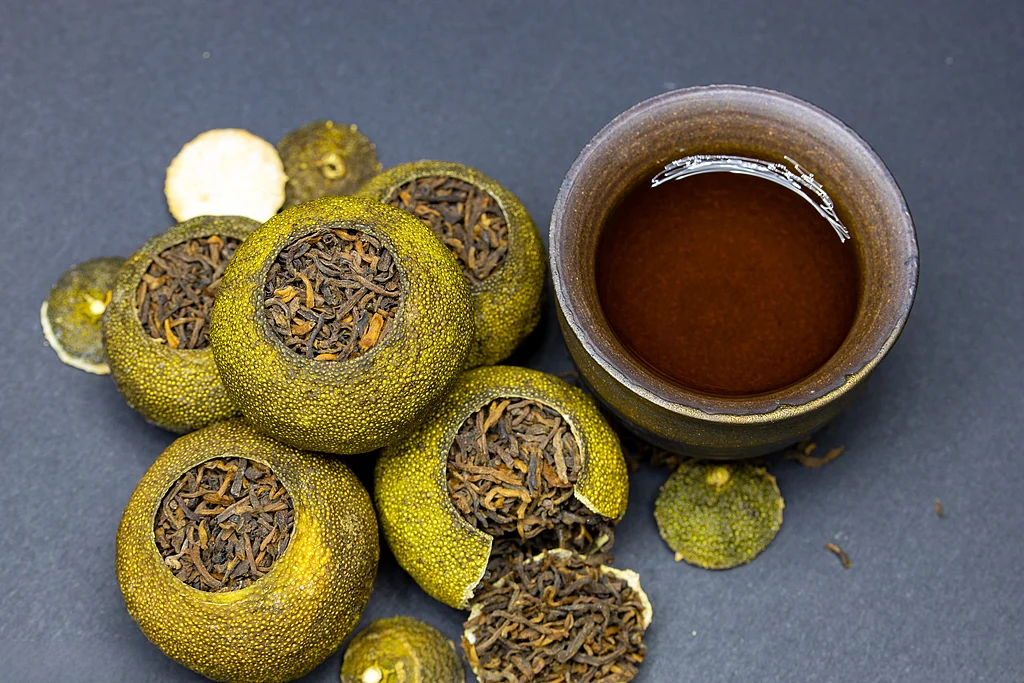
Xiao Qing Gan refers to a small, unripe mandarin fruit. Unlike other citrus fruits, Xiao Qing Gan is known for its stronger, more concentrated flavor. This unripe fruit is often paired with Pu-erh tea, creating a blend that is both refreshing and complex. However, Xiao Qing Gan can’t be called Chenpi because it hasn’t undergone the aging process necessary for Chenpi’s medicinal qualities.
The Magic of Pu-erh Tea
Pu-erh tea, one of China’s most famous tea types, is a fermented tea that undergoes a unique aging process. It is renowned for its deep, earthy flavor and potential health benefits, such as supporting digestion and helping to manage cholesterol. When paired with the aromatic Xiao Qing Gan or aged Chenpi, Pu-erh tea creates a harmonious and layered taste profile.
Chenpi Pu-erh vs Xiao Qing Gan Pu-erh
The key difference lies in the use of the fruit peel. Chenpi Pu-erh is made with aged Chenpi (dried mandarin peel), which brings a unique complexity and medicinal quality to the tea. Xiao Qing Gan Pu-erh, on the other hand, uses the fresh peel of the small green tangerine, offering a bright and bold flavor without the deeper medicinal notes of Chenpi. While both offer a rich tea-drinking experience, Chenpi Pu-erh is generally more mature and considered to have a deeper, more nuanced flavor.
How to Choose Between Chenpi Pu-erh and Xiao Qing Gan Pu-erh
If you are new to citrus Puerh, it can be hard to decide whether to start with Chenpi Pu-erh or Xiao Qing Gan Pu-erh. Both belong to the same family of Chenpi Xiao Qing Gan Pu-erh tea, but they shine in slightly different moments of the day.
- Choose Chenpi Pu-erh when you want a more mature, comforting cup. The aged Chenpi peel adds depth, warmth and a gentle herbal sweetness that feels soothing after heavy meals.
- Choose Xiao Qing Gan Pu-erh when you crave something brighter and more refreshing. The fresh green mandarin peel brings a zesty, juicy note that wakes up your palate and pairs well with long study or work sessions.
- Alternate between both if you drink citrus Puerh tea every day. Many tea lovers enjoy Xiao Qing Gan during the day and Chenpi Pu-erh in the evening for a deeper, slower experience.
Over time, you may discover that your taste changes with the seasons: lighter Xiao Qing Gan in warmer weather and darker Chenpi Pu-erh when the days turn cooler. Keeping both on your shelf gives you the freedom to match your tea to your mood and your body’s needs.
Conclusion: Why These Teas Are Worth Trying
Both Chenpi and Xiao Qing Gan bring distinct flavors and benefits to Pu-erh tea. Whether you are drawn to the comforting depth of Chenpi or the refreshing brightness of Xiao Qing Gan, these blends are sure to offer a unique and satisfying tea-drinking experience.