
Many tea lovers hear about Xiaoqinggan vs Chenpi (Xinhui tangerine peel) and wonder: are they the same thing, which one is healthier, and what should I buy first? This guide explains their definitions, key differences, hidden connection, and gives you a simple buying roadmap.
What Are Xiaoqinggan and Chenpi?
Both products originate from Xinhui’s unique terroir, but they differ in harvest time, processing, and form. Let’s clarify their definitions first.
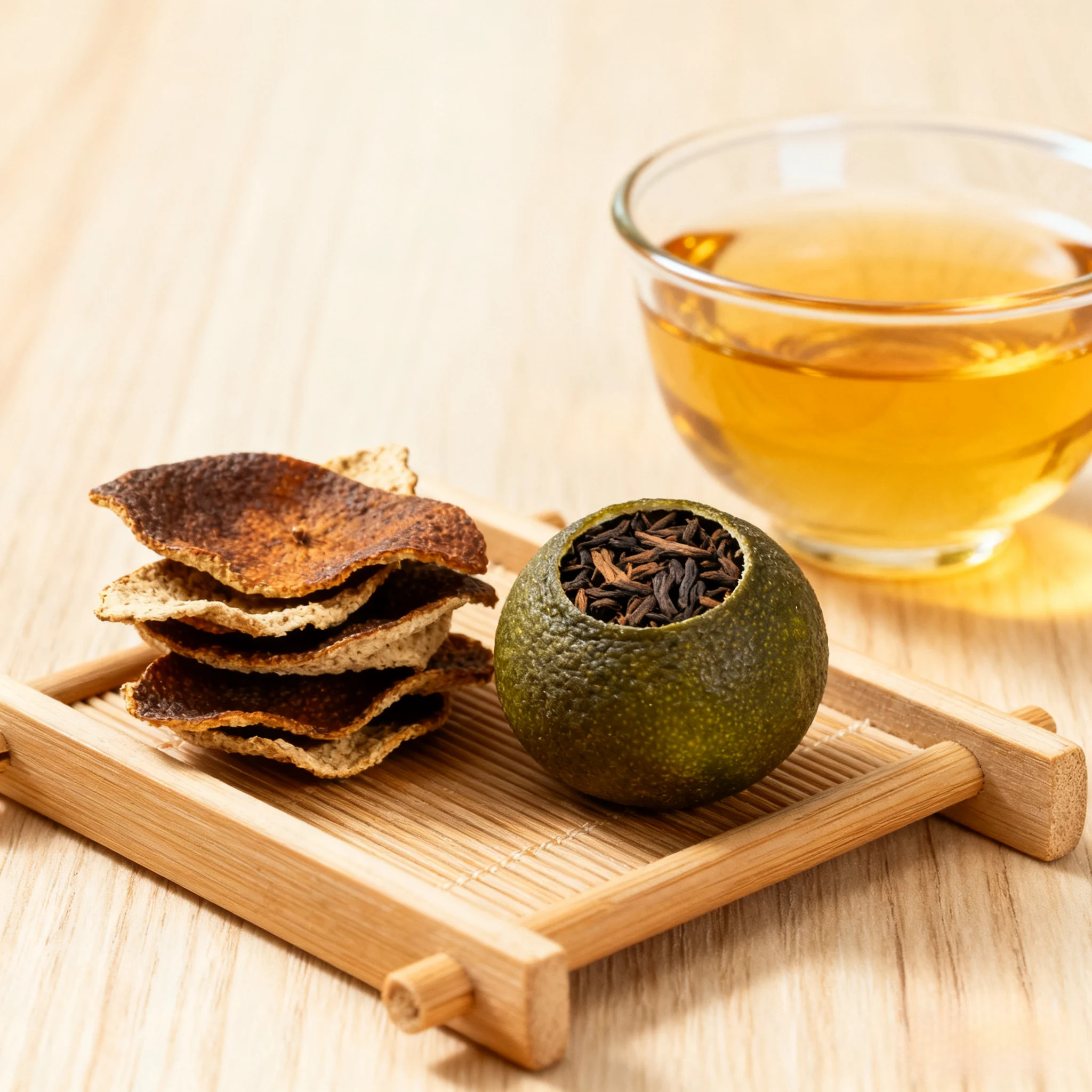
Xiaoqinggan (小青柑)
Xiaoqinggan literally means “young green mandarin.” It is crafted by hollowing out unripe small mandarins (usually harvested in July–August in Xinhui) and filling the peel with aged Pu-erh tea from Yunnan. The whole fruit is then dried naturally under the sun or with low-temperature machines to lock in the fresh citrus aroma and mellow tea flavor.
- Raw material: Unripe small green mandarins from Xinhui.
- Form: Tea-filled citrus “balls” or sliced segments.
- Flavor: Bright lime/bergamot-like citrus with sweet, smooth Pu-erh.
- Best for: Daily drinking, gifts, quick brewing at home or office.
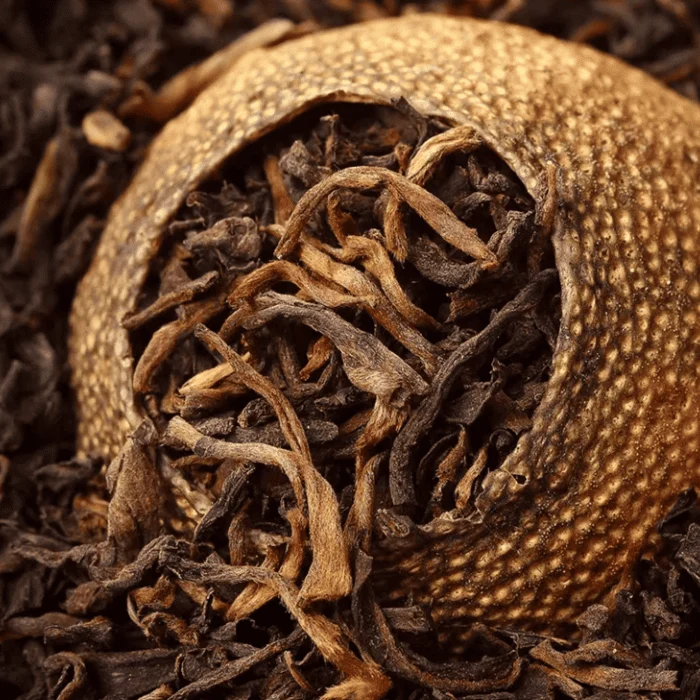
Chenpi (Xinhui Tangerine Peel, 新会陈皮)
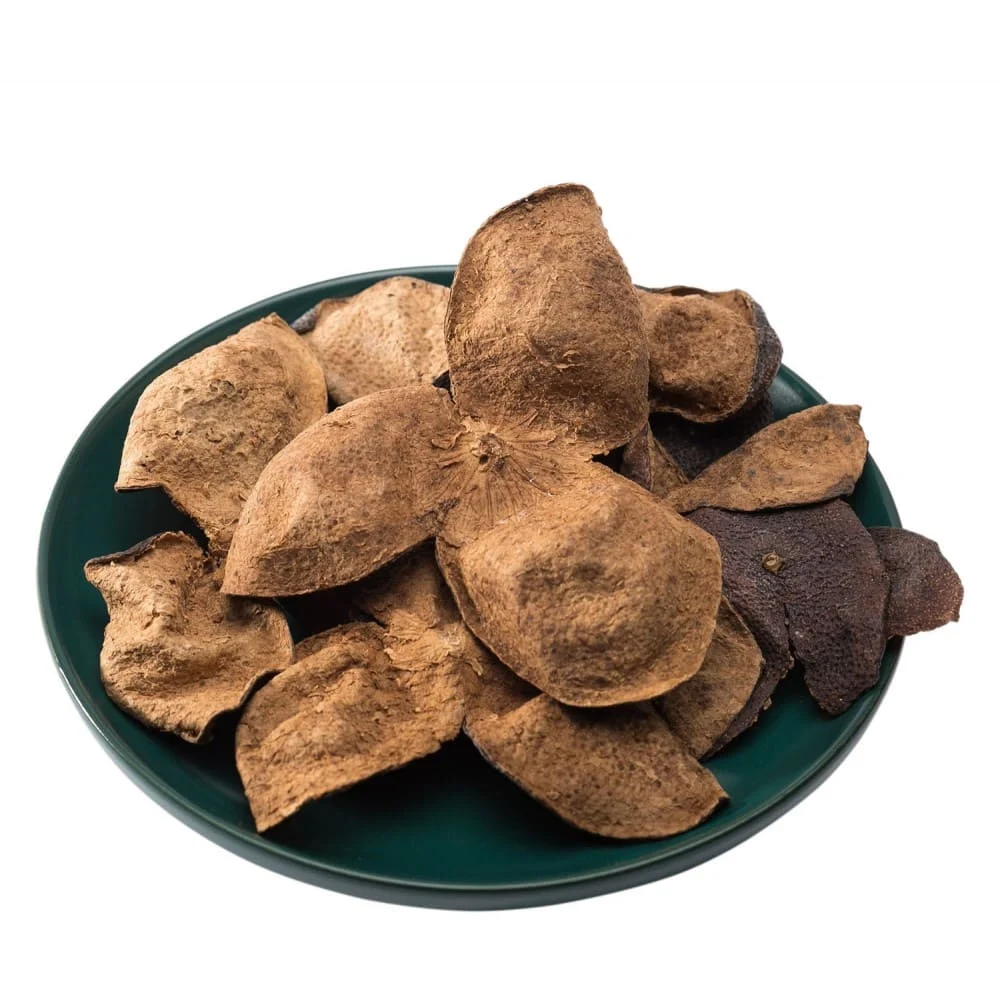
Chenpi means “aged tangerine peel”. The most prestigious type is Xinhui Chenpi, made from ripe mandarins (Citrus reticulata ‘Chachi’) harvested in November–December from Xinhui’s core production areas such as Gujing and Tianma. The peels are separated, sun-dried and then naturally aged for at least three years—the longer the aging, the higher the value and complexity. No tea is added; it’s pure preserved peel.
- Raw material: Ripe, large mandarins from Xinhui core region.
- Form: Loose dried peel, sometimes pressed into cakes or blended with tea.
- Flavor: Rich earthy citrus, sweet woody notes, evolving with age.
- Best for: Brewing on its own, blending with tea, cooking and herbal recipes.
Core Differences: Xiaoqinggan vs Chenpi at a Glance
They share the same hometown, but their personality in the cup is very different. Here is a quick comparison table:
| Aspect | Xiaoqinggan (小青柑) | Chenpi (Xinhui Tangerine Peel, 新会陈皮) |
|---|---|---|
| Raw Material | Unripe small green mandarin peels | Ripe large mandarin peels from Xinhui core region |
| Harvest Season | Summer (July–August) | Late autumn–early winter (Nov–Dec) |
| Processing | Hollowed + filled with Pu-erh + dried | Peeled + sun-dried + naturally aged (3+ years) |
| Composition | Tea + peel hybrid (“tea-fruit combo”) | Pure citrus peel, no tea added |
| Flavor Profile | Fresh, zesty citrus with sweet, smooth Pu-erh | Deep, mellow, layered aged citrus and woody sweetness |
| Usage | Ready-to-brew whole or sliced, convenient daily tea | Brew alone, blend with tea, cook, or use in wellness drinks |
| Shelf Life | Best within 2–5 years to enjoy freshness | 10+ years; quality and value grow with proper storage |
| Value Logic | Peel freshness & Pu-erh grade matter most | Origin + aging years + storage conditions decide value |
3 Must-Know Contrasts
- Composition – Xiaoqinggan is a tea-fruit hybrid, while Chenpi is pure aged peel. One is designed as a finished beverage, the other as a versatile ingredient.
- Flavor Vibe – Xiaoqinggan is bright, refreshing and slightly playful; Chenpi is calm, deep and meditative, with a more herbal character.
- Quality Driver – Xiaoqinggan’s quality comes from peel freshness and Pu-erh quality; Chenpi’s value is driven by Xinhui origin, careful aging and storage conditions over many years.
The Hidden Connection Between Xiaoqinggan and Chenpi
Here’s the fascinating link: the peel of Xiaoqinggan is essentially the “young version” of Chenpi. If you remove the tea, dry the green peel properly and age it for several years, it technically becomes a form of Chenpi.
In practice, however, traditional high-grade Chenpi is made from fully ripe mandarins, which carry more sugar and aroma precursors. That’s why aged Chenpi develops such deep, honey-like sweetness, while Xiaoqinggan keeps a more lively, lime-like freshness.
Both rely on Xinhui’s subtropical climate and river-rich soil to give the peel high oil content and a distinctive “sun-soaked earthy aroma” that cannot be replicated elsewhere—this is why authentic Xiaoqinggan and Chenpi must come from Xinhui.
If you want to dive deeper into why Xinhui is so special for both Xiaoqinggan and Chenpi, read our full guide Why Xinhui Is So Special .
Buying Guide: Which One Should You Choose?
Choose Xiaoqinggan If…
- You want a ready-to-brew citrus Pu-erh that is easy to enjoy.
- You like bright, refreshing flavors with a natural sweetness.
- You often share tea with friends or need a beautiful gift.
- You prefer convenient brewing at the office or while traveling—just drop one piece into a mug or gaiwan.
Explore our full range of Xiaoqinggan here: Shop Xiao Qing Gan collections .
Choose Chenpi If…
- You enjoy gentle herbal flavors and traditional wellness drinks.
- You like to cook with citrus peel in soups, braises and desserts.
- You are interested in long-term aging and collection.
- You want to adjust intensity by adding more or fewer pieces of peel in each brew or recipe.
Discover different aging years of Chenpi here: Shop aged Xinhui Chenpi .
Building Your Ideal Citrus Tea Set
For most tea lovers, the best choice isn’t “Xiaoqinggan vs Chenpi” but “Xiaoqinggan and Chenpi”. A simple starter set could be:
- One tin of daily Xiaoqinggan for easy, refreshing brews.
- One jar of 5-year Xinhui Chenpi for brewing alone, blending with tea and cooking.
- Later, add a small amount of older Chenpi (10-year+) for slow tasting and special occasions.
Over time, you’ll naturally discover when your body prefers the bright lift of Xiaoqinggan and when it craves the deep comfort of aged Chenpi—both are gifts from the same Xinhui mandarin tree, just at different moments of life.
Curious about how Xinhui Chenpi changes over 3, 5 and 10+ years? Explore our detailed aging guide here: 3-Year vs 5-Year vs 10-Year Xinhui Chenpi Guide .