
The OUDA Story: Where Time Is the Best Ingredient
OUDA TEA began long before there was a website or a logo. Our story starts in the mandarin groves of Xinhui, China—the birthplace of authentic aged citrus peel. Here, generations of growers turned simple fruit into something quietly extraordinary: Xinhui Chenpi and Xiao Qing Gan.
Today, our teas travel from this river-delta corner of Guangdong to cups around the world, but one belief still guides everything we do: time is the most important ingredient in every batch we make.
At a glance
- Origin: Xinhui, Guangdong (core terroir for authentic Chenpi)
- Craft: Traditional sun-drying + slow, natural aging
- Purity: Independent lab testing for global markets
- Compliance: EU Maximum Residue Limit (MRL) standards
- Roots: A family craft that traces back to 1996
Explore Our Curated Collections Read Our Guides
1996: Roots in a Xinhui Mandarin Grove
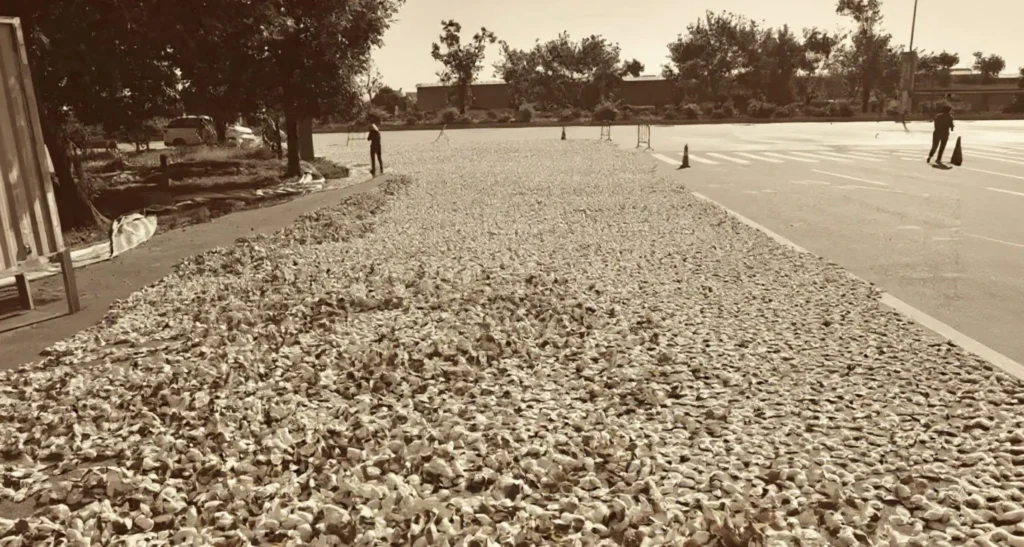
In the spring of 1996, the first light of dawn fell over a mandarin grove in Chaping Village, Xinhui. Among the trees, an old grower known locally as Old Huang was doing what he had done for decades—turning freshly peeled citrus in the sun so each piece would dry evenly. Behind him, three generations of sun-drying sheds stood as quiet witnesses to his family’s craft.
That modest field, surrounded by rivers and low hills, would later become the “living calling card” of OUDA’s Xinhui Chenpi. The peels drying in that morning light were more than seasoning; they were the beginning of a bridge connecting tradition and modern wellness, China and the rest of the world.
I. The Rarity of Xinhui Terroir
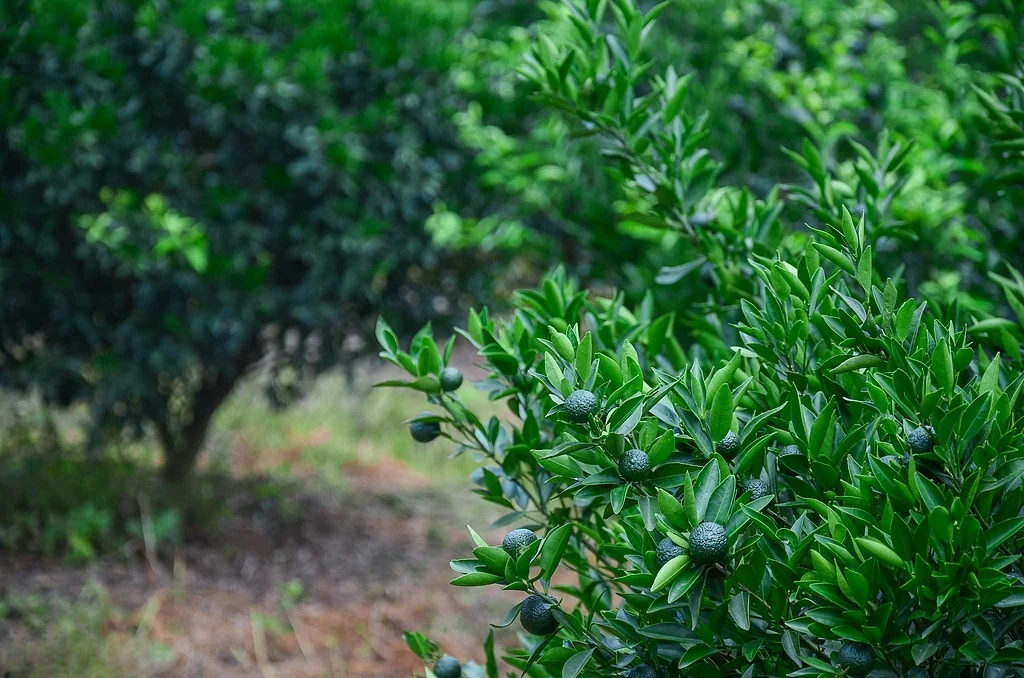
We believe exceptional flavor can only come from exceptional land. The story of OUDA TEA is inseparable from Xinhui, a citrus-growing region in Guangdong famous for its aged peel. A unique microclimate—where fresh river water meets tidal currents—together with mineral-rich alluvial soil gives our mandarins:
- Dense, active oil cells in the peel.
- Rich, layered citrus aroma that deepens with age.
- Natural strength to withstand years of careful aging.
Every citrus fruit we select carries this terroir. This is what defines true Xinhui Chenpi—and the Xiao Qing Gan that shares the same land.
II. The Art of Slow Aging
At OUDA, we reject industrial shortcuts. Our most precious ingredient is not a secret additive—it is time. Both our Chenpi and Xiao Qing Gan are crafted to let time work slowly and naturally.
1. The Artisan’s Process for Chenpi
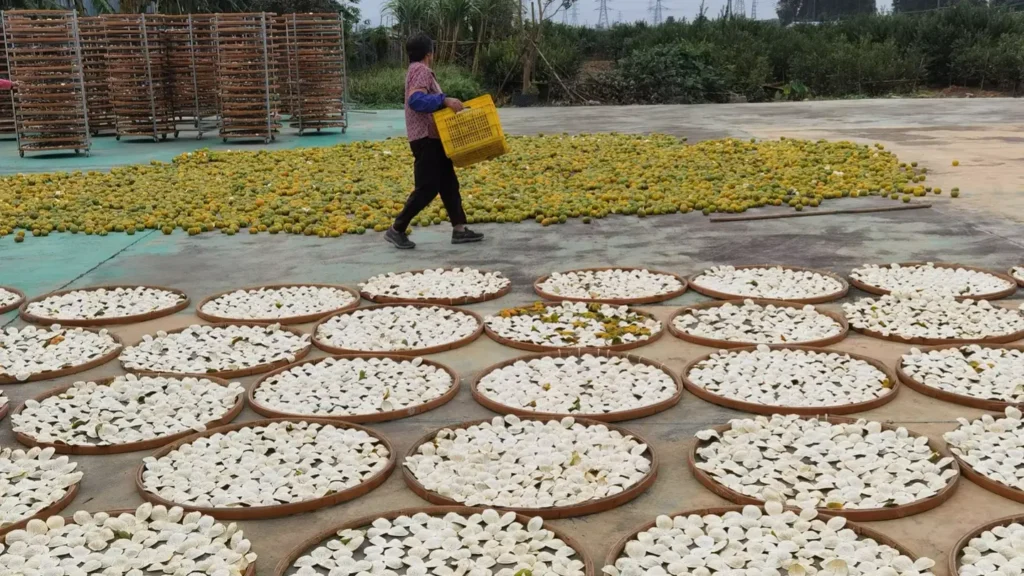
For our aged tangerine peel, we follow the traditional sun-drying process. Freshly peeled rinds are spread over bamboo trays and dried under natural light and air, then rested, then dried again. Over years, sharp citrus edges fade and the peel develops a deep, rounded fragrance. Volatile oils mature gradually, turning bright acidity into complex sweetness and warmth that machines can never replicate.
2. The Meticulous Craft of Xiao Qing Gan
Our Xiao Qing Gan (Green Citrus Pu-erh) is another expression of this patience. Each small green mandarin is harvested by hand at just the right moment, then carefully hollowed to create a natural shell. We gently fill it with aged Pu-erh tea so citrus peel and tea leaves can breathe together as they dry and age. The result is a tiny sphere where bright citrus oils and deep tea sweetness are perfectly woven together—an artisan object you can hold in your palm and brew in a single pot.
Want to explore the brewing ritual and tools? Start here: Best teaware for Chenpi & Xiao Qing Gan.
III. 2009–2013: From Local Specialty to Cultural Icon
In 2009, Xinhui Chenpi stepped from local specialty onto the cultural stage. It was listed as Intangible Cultural Heritage of Guangdong Province and named one of Guangdong’s most representative local foods. Later that year, it topped Jiangmen’s “Top 10 Agricultural Local Products” list, honoring it as a symbol of the region’s identity.
For OUDA, these honors were never just brand labels—they were recognition of Xinhui Chenpi itself. During this period, our team interviewed elder farmers to document traditional techniques such as multi-stage steaming and drying. Beside the sun-drying fields, we helped establish a small Chenpi Culture Museum filled with worn tools, old photos and handwritten ledgers, where visitors can touch a living history of peel, people and time.

In 2011, Xinhui was recognized as “China’s Hometown of Chenpi” and “China’s Hometown of Authentic Chenpi Medicinal Materials.” OUDA’s traditional sun-drying field became a model demonstration workshop for this heritage. By 2013, when the “China Herbal Culture Demonstration Base” plaque was unveiled, our founder Huang Xinrong had fully taken up his father’s work with a new vision: Chenpi should not be confined to the label of “medicine” alone—it can also be tea, daily ritual and cultural experience.
IV. 2019–2022: From Chinese Icon to Global Flavor
In 2019, Xinhui Chenpi entered China’s Agricultural Brand Catalog, a national list of trusted agricultural products. It was a milestone that acknowledged decades of craft and confirmed Xinhui’s place on the map of Chinese flavor.
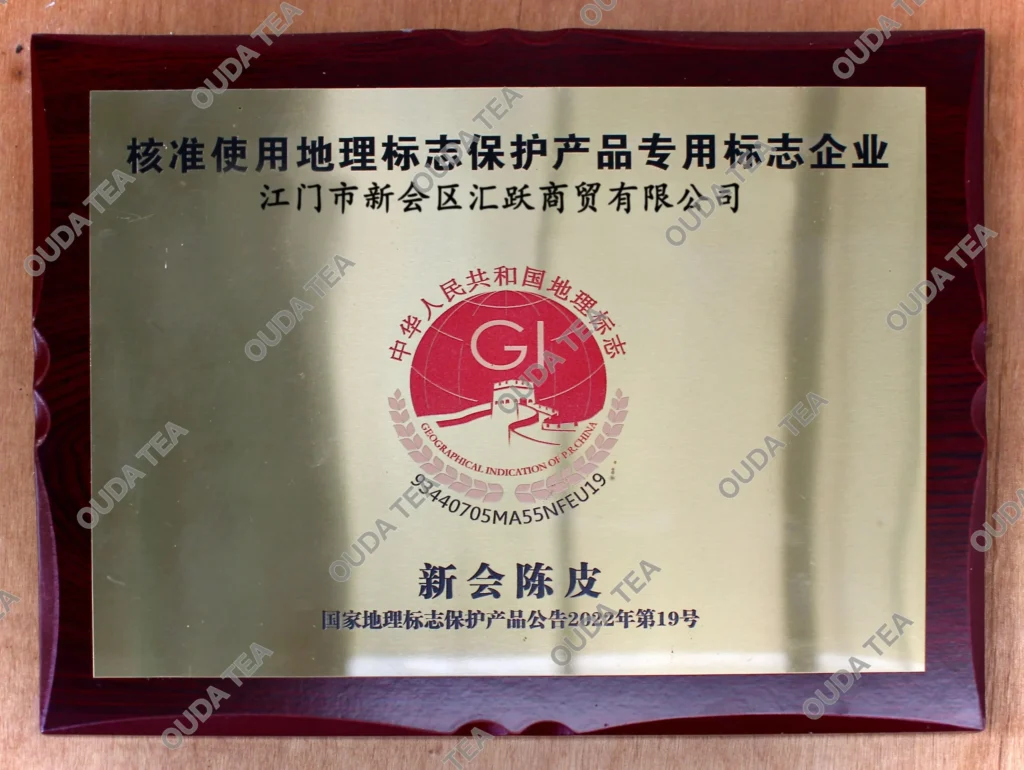
The following year brought another historic step: in 2020, Xinhui Chenpi was included in the second batch of Protected Geographical Indications under the China–EU Agreement. This status means that when you see the name “Xinhui Chenpi,” you can be confident the peel truly comes from this small region with its unique terroir.
That same year, OUDA established a dedicated international trade company to share Xinhui Chenpi and Xiao Qing Gan with tea drinkers around the world, while protecting the traditions that made them special in the first place.
V. Our Uncompromised Commitment to Purity
As OUDA began to serve customers beyond China, one principle became non-negotiable: purity. Every batch of OUDA Chenpi and Xiao Qing Gan that enters the global market is tested by independent laboratories. We are proud that our products comply with strict EU Maximum Residue Limit (MRL) standards, which means:
- No sulfur fumigation.
- No pesticide residues beyond regulated limits.
- No hidden additives—only fruit, tea, and time.
This is not a slogan; it is our promise that the tea you drink at home is the same tea we are happy to brew for our own families.
VI. An Invitation to Taste Heritage
From 1996 to today, the story of OUDA has been written into every oil gland of our Xinhui Chenpi, in the hands of artisans who turn the peels under the sun, and in the memories of everyone who has ever warmed their hands on a cup of Chenpi or Xiao Qing Gan tea.
We are not simply selling dried citrus peel—we are sharing a way of life: slow down, let each peel age naturally, and savor the depth of time.
We invite you to pause, steep a cup of OUDA TEA and experience this heritage for yourself. Whether you are enjoying Chenpi as a daily wellness ritual or keeping a small jar of Xiao Qing Gan for special occasions, you are taking part in a story that began in a small Xinhui grove and continues in every cup.
Shop OUDA Tea Learn from Our Blog
FAQ
Is OUDA Chenpi or Xiao Qing Gan sulfur-fumigated?
No. We do not use sulfur fumigation, and our products are independently tested for global markets.
What does “EU MRL compliant” mean?
It means pesticide residues (if any) remain within the regulated Maximum Residue Limit requirements for the EU market.
What makes Xinhui Chenpi different from ordinary dried citrus peel?
Xinhui is a recognized core terroir for Chenpi, known for peel oil cells and aroma that can evolve through long aging—this origin is what defines authenticity.